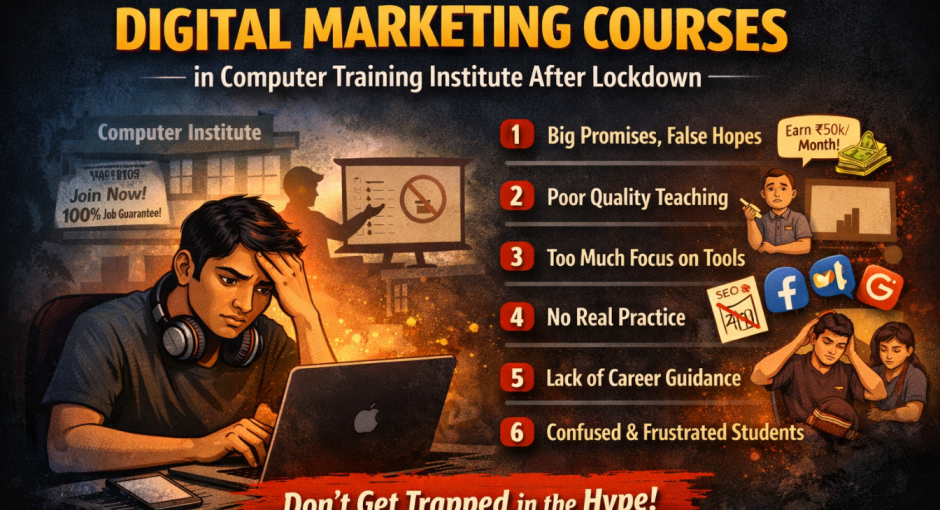

In the year 2020, everything unknowingly changed. When the COVID-19 lockdown in India started, millions of people were forced to stay at home. Offices closed, schools, colleges, physical classes stopped, and many people lost their jobs or income.
During this difficult time, one term suddenly became very popular: Digital Marketing.
People started hearing that digital marketing was the future of jobs, a high-demand skill, and a career that could be learned quickly. Social media platforms were full of advertisements saying:
“No technical skills required”
“Earn ₹50,000 per month from home”
“Become a Digital Marketing Expert in 3 Months”
These promises attracted thousands of college students, fresh graduates, and job seekers. Everyone wanted to learn digital marketing and build a better career.
But after a few years, a different reality started to appear.
Many students who joined these courses never completed them successfully. Some lost interest, some got confused, and many realized that things (like jobs, freelancing) were not as easy as they were promised.
Let’s talks about the real reasons behind this problem.
The Gap Between Promise and Reality
When students join a Digital Marketing course, everything feels exciting at first. They introduce topics like Search Engine Optimization, ads on Google Ads, Social Media, website creation using WordPress, and tracking data with Google Analytics.
But soon many students realize that digital marketing is not as simple as it was promised.
Digital marketing is not just about using tools. It also requires:
- Marketing strategy
- Creativity
- Research Skills
- Data Analysis
- Patience and Continuous Learning
Many students were not prepared for this level of complexity.
They thought the course would be simple and quick, but it turned out to be deeper than expected.
Missing Basic Skills Among Beginners
Some learners enter digital marketing courses without strong basic skills in areas like:
- Computer Usage
- Reading and Understanding English Content
- Online Research
- Logical and Analytical Thinking
Since digital marketing involves reading, analysis, and continuous learning, these missing basics can make the course more difficult for beginners.
Poor Counseling Before Course Enrollment
Another important issue is the way some institutes counsel students before they join the course.
Many computer institutes focus mainly on selling the course instead of properly guiding the student. During counseling, they often promise quick success, high salaries, and easy learning in Digital Marketing.
But they rarely explain the real challenges of the course, such as the need for creativity, analytical thinking, and continuous practice.
Proper counseling should help students understand:
- what digital marketing actually involves
- what skills are required
- what career paths are available
Without honest guidance, students may join the course with unrealistic expectations, which later leads to confusion and disappointment.
Too Much Attention on Tools Instead of Marketing Thinking
Many courses teach students how to use tools like Google search console, Facebook Ads Manager, Google Ads, and Canva, Designing email newsletter, Affiliate Marketing, Google Adsense and much more tools.
But tools alone are not enough. Students also need to understand marketing thinking, customer behavior & their psychology, marketing strategy, brand positioning, and audience research. Without these fundamentals, they only learn how to use tools but not how to become real marketers.
No Clear Career Direction
Digital marketing is not just one job. It is a field with multiple career paths. Such as SEO specialist, Google Ads specialist, social media manager, or performance marketer. Students often finish the course but remain confused about which direction they should follow. But many institutes do not clearly explain these options.
As a result, students complete their training but remain unsure about which direction they should follow. This lack of clarity can make the transition from learning to employment more challenging.
Teaching Methods That Do Not Match Industry Needs
In many places, the training approach is heavily focused on theory. Trainers may rely mainly on slides, recorded videos, or basic explanations without involving students in practical work.
However, digital marketing is a practical skill. Students need to work on real tasks like building websites, creating live campaigns, and analyzing real time website & campaign data. Without practical learning, it becomes difficult for students to gain confidence.
The Emotional Impact on Students
For many students, joining a digital marketing course is not just about learning a skill. It is about hope for better career, Some students want to support their families. Some want to build a successful career. Some want to escape unemployment.
When they realize that the course is not what they expected, it can be emotionally disappointing. They may feel confused, frustrated, doubtful about their abilities, blaming to institute & course
This emotional side of the problem is rarely discussed.
Digital Marketing Course Enrollment Trend in Mumbai (2019-2025)
| Year | Estimated Students Enrolling |
|---|---|
| 2019 | 8,000 |
| 2020 | 15,000 |
| 2021 | 20,000 |
| 2022 | 25,000 |
| 2023 | 30,000 |
| 2024 | 35,000 |
| 2025 | 40,000 |
“Digital marketing is not a shortcut to success. It is a professional skill that requires patience, practice, and continuous learning. Students should choose institutes carefully and focus on building real skills rather than chasing quick promises.”
What Students Should Check Before Joining a Digital Marketing Course
1️⃣ Skills Required for Students
Students should first understand the basic skills needed to learn digital marketing successfully. These include basic computer knowledge, internet research skills, creativity, patience, and a willingness to learn continuously.
2️⃣ Trainer Experience
Check whether the trainer has real industry experience in areas like Search Engine Optimization and paid advertising through Google Ads.
3️⃣ Practical Learning
A good course should include hands-on practice such as building websites with WordPress and analyzing campaign data using Google Analytics.
4️⃣ Updated Course Content
Digital marketing changes very fast. Make sure the syllabus includes updated tools, strategies, and current industry trends.
5️⃣ Real Projects and Assignments
Students should get opportunities to work on real projects, not just theory or slides. Practical work helps build confidence and real skills.
6️⃣ Clear Career Guidance
The institute should explain different career options like SEO specialist, social media manager, or performance marketer.
7️⃣ Honest Counseling
A good institute will explain both the opportunities and challenges of digital marketing instead of making unrealistic promises.
8️⃣ Student Reviews and Results
Before joining, check feedback from previous students and see examples of their work or success stories.
“Not All Digital Marketing Institutes Are Bad”
Some Good institutes provide:
- Live Projects
- Internships, Job Placement
- Industry Trainers
- Updated Curriculum Time to Time
- Portfolio Building
Many modern courses include hands-on projects and mentorship to prepare students for real jobs.





Social Profiles